SEPIA JOURNAL
How client businesses
move forward.
Product notes, field guides, and research about relationships, operations, and intelligence in context.

The client record should move with the work.
Why the next generation of CRM is organized around the relationship instead of a collection of modules.
Read story
Calls should end with a next move.
Designing call intelligence around playbooks, missing information, and action—not transcripts alone.

One path from booked to paid.
What changes when scheduling, agreements, invoices, payments, and reminders share one client record.

Why CRM intelligence needs context.
Useful answers begin with the record, permissions, and work already inside the business.

Onboarding around outcomes, not configuration.
A first workspace should feel useful before a new operator learns how the system is built.

Connections, not integrations.
Plain language for the systems a business relies on every day.

When the client returns, the record should be ready.
A returning client should feel remembered without depending on one employee’s memory.

The rain plan is still the client plan.
When weather moves an event, every vendor, promise, and guest message has to move with it.

A missed call is still a client moment.
The useful record begins before somebody answers and continues after the voicemail ends.

Proof belongs in the project, not somebody’s inbox.
An approval becomes useful when the drawing, decision, change, and cost stay together.

What changes when the owner takes a week off.
A business becomes more durable when the work can move without pretending the owner is always available.

A payment reminder can remember the relationship.
Two overdue invoices may need two very different conversations.

Intake should know where privacy begins.
Scheduling context can help the team without turning sensitive care notes into general workspace data.

One client. Two decision-makers. Three channels.
A relationship is rarely as tidy as a single contact field.

The keys changed hands. The context should too.
The leasing handoff should not make a new resident repeat access needs, promises, and open repairs.

Context is a service standard.
Remembering the client is not administrative polish. It is part of the work they paid for.

A booking page is part of the operation.
The best booking experience starts the work instead of creating another task to re-enter it.
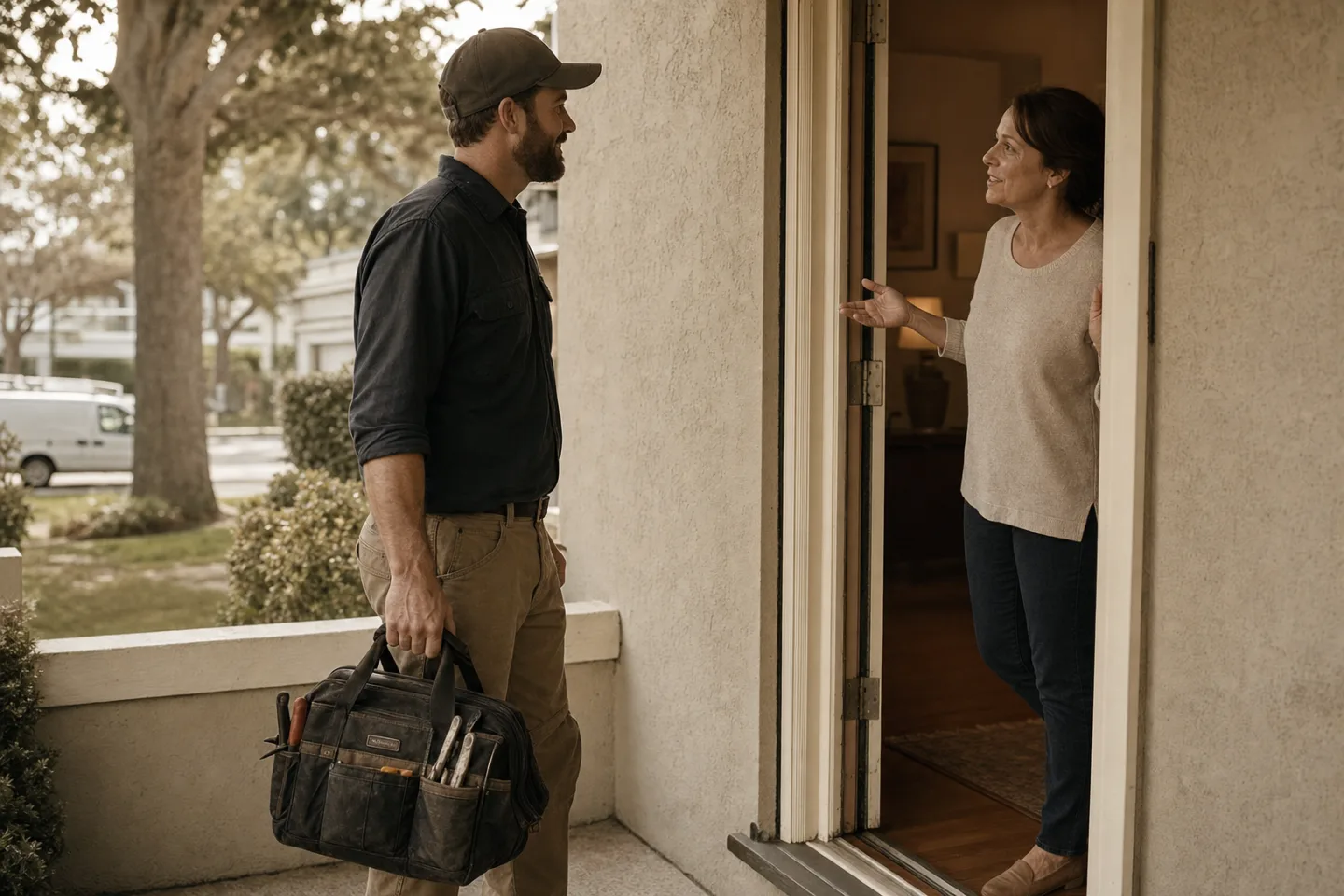
From estimate to arrival window.
A home-service client should not have to reconstruct the job at every step.

The record should explain its confidence.
A suggested match is useful only when the operator can see why the system believes it.

When automation should stop and ask.
A changed venue is not merely a changed field when deposits, vendors, and promises depend on it.

Proofing is part of the relationship.
Selections, comments, revisions, and delivery belong beside the project that created them.

Seasonal businesses need a longer memory.
The most valuable context may go quiet for eleven months and become urgent in one afternoon.

A cancellation is not an empty slot.
The reason, preparation, reschedule, and waitlist matter more than the blank square left behind.

Design for the person answering the phone.
The useful interface is the one that works while someone is pinning a hem, opening a door, or finding a key.

The project is over. The client is not.
Closing the work should preserve delivery history, promises, and the reason to reconnect.

What the morning list should know.
Priority comes from promises, weather, materials, and client history—not task age alone.

Ownership should be visible before urgency.
An overdue item is not actionable until the team knows who owns the relationship and what was promised.

The second inbox is where work disappears.
A social message becomes operational the moment a client asks for a date, quote, or commitment.

Small businesses do not need smaller ambitions.
A growing client business deserves operational depth without inheriting enterprise ceremony.

A lead form should begin the relationship.
The first inquiry should arrive as usable context, not a notification that asks the team to start over.

The quiet work between “yes” and signed.
A verbal decision begins a chain of scope, signer, deposit, kickoff, and expectations.

What a useful Monday brief leaves out.
Good intelligence is partly defined by the information it refuses to surface.

The best next action may be no action.
Respecting a client’s stated pause can be more intelligent than another perfectly timed follow-up.

The return visit begins at delivery.
Care instructions, breakage terms, and reorder timing turn a finished commission into an ongoing account.

The business has a memory. Teams need access to it.
Continuity should survive a role change without exposing everything to everyone.

The client should not feel the handoff.
Sales, production, and billing can change hands without making the client repeat the story.